AVIAN INFLUENZA ON NORTHERN GANNETS POPULATIONS : THE SEPT-ÎLES NATURAL RESERVE (FRANCE)
August and September, 2022 // Volunteer work for Sea Shepherd France
All images are the property of Sea Shepherd France and are used with permission.
_______________________________________________________________________________________________________________________________________
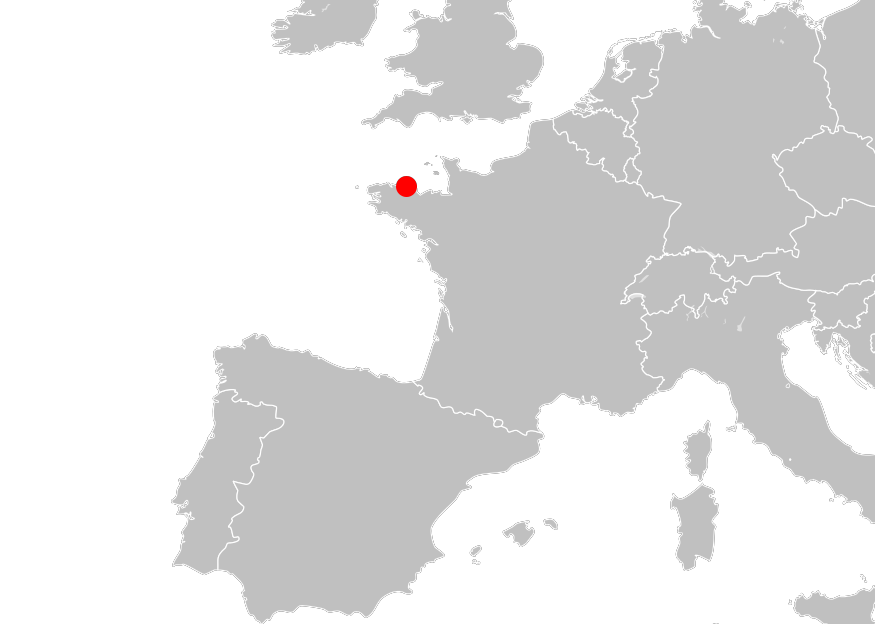
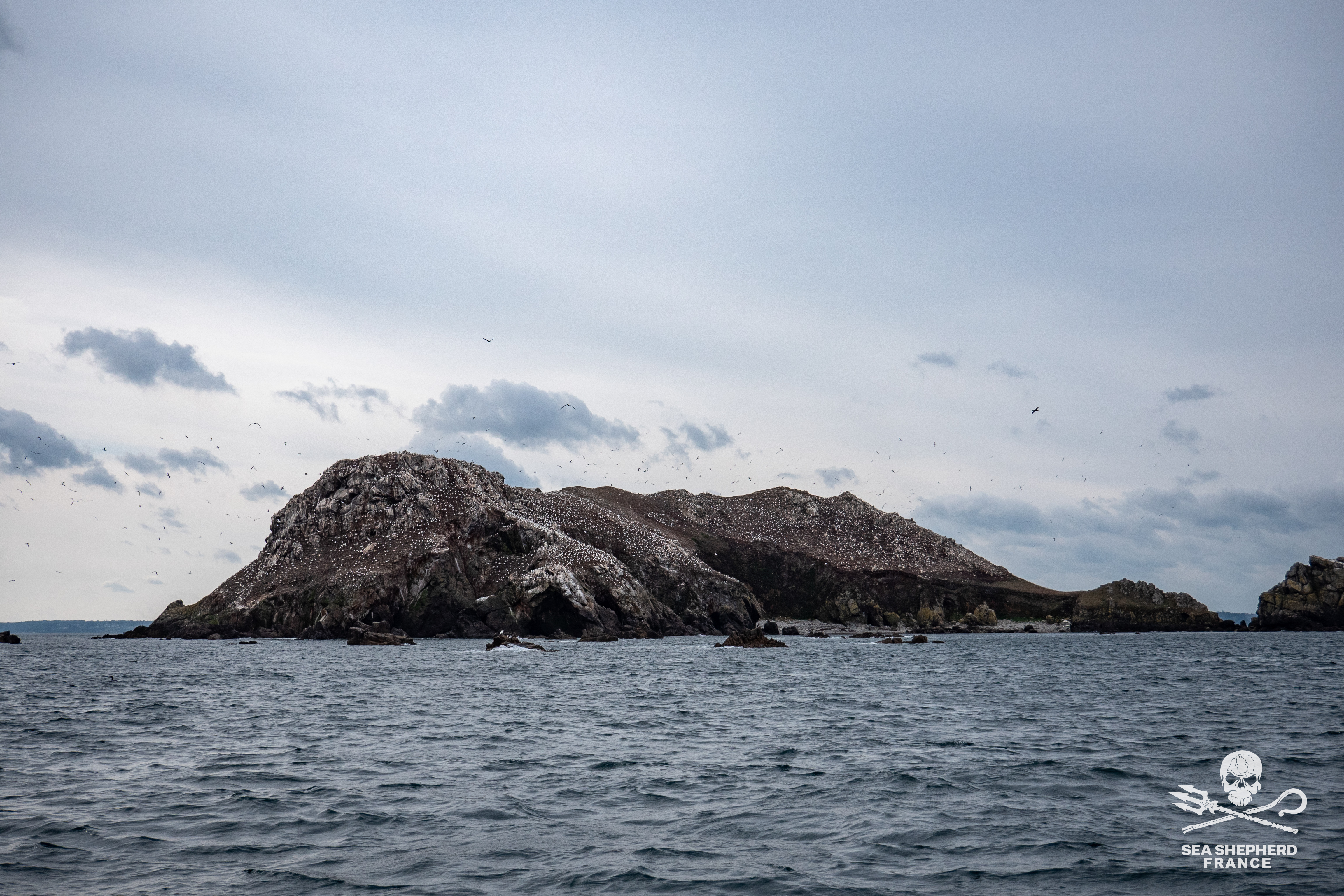
The Sept-Îles natural reserve is home to one of the 54 Northern gannets colonies in the world, the only one in France. During the breeding season, 19.000 pairs give normally birth to a single chick on the archipelago. The white plumage of the adults give Rouzic Island the impression of being covered with snow. However, this year, a large trench of empty nests stretches across the western side of the island. According to the “Ligue de Protection des Oiseaux (LPO)” the failure rate of reproduction would be 90%. The cause of this worrying and unprecedented situation is the highly pathogenic avian influenza (HPAI), or “bird flu”, known as H5N1. As a result, far fewer young birds will be recruited back into the population in 2023 and, as a long-lived species that does not breed until it is 4 years or older, it will take the gannet colony several years to recover.
Moreover, seabird populations that are now being slashed by bird flu are already at risk from the combined threats of climate change, overfishing of their prey, by-catch in fisheries, and non-native mammalian predators eating their eggs and chicks, such as rats and cats. As they play vital roles in ecosystems on sea and land, declining seabirds could have major impacts and likely upset the balance of ecosystems.

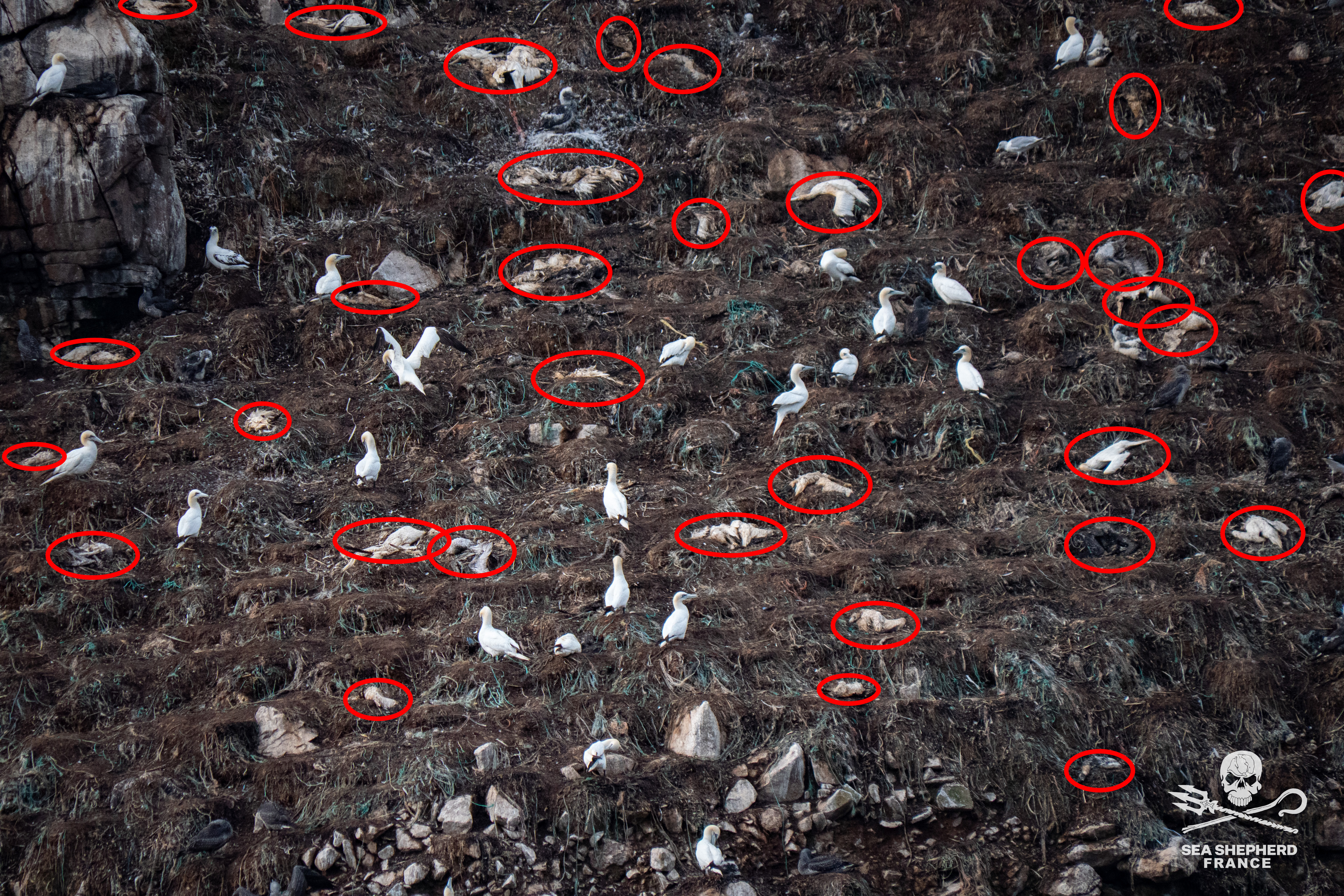
These images depict a hecatomb. On the walls of Rouzic Island covered with nests, the vast majority are unoccupied. According to the LPO, the rate of desertion of this site of reproduction and brood would rise to 80% this year. The chicks, not yet able to fly, are surrounded by the corpses of their fellow birds. Dependent on their parents’ fishing during their first five months, many are led to die of hunger or disease.
The Northern gannet usually builds the base of its nests with plant debris. Over the years it will become a pill of feathers, fish remains, carcasses of other birds and excrement. However, on Rouzic Island, the blue-green color of the nests alerts : they are pieces of fishing gear, which testifies to an important marine and coastal plastic pollution.
Below : Of the 150 nests in the image, only 34 are occupied by living gannets, 13 of which are juveniles. There are also 33 dead gannets (red circles).


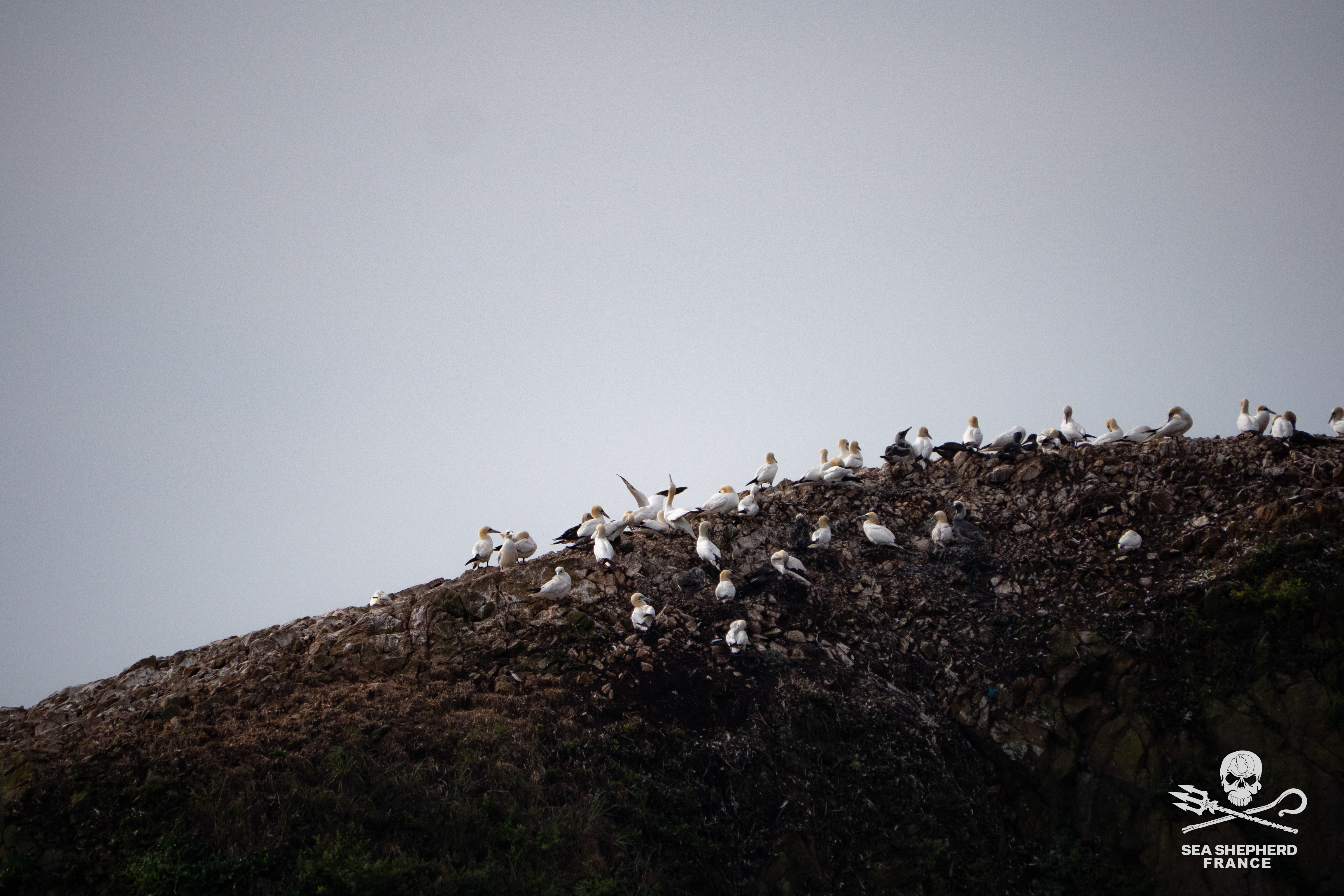
Noisy clacking sounds were heard offshore : gannets had gathered between Rouzic and Malban islands and were starting to fish. It was spectacular. Once the school of fish located, several hundred individuals were gliding in the air before diving on their preys at nearly 90 km/h. Even today, this behaviour allows amateur and professional fishermen to locate fish schools precisely.
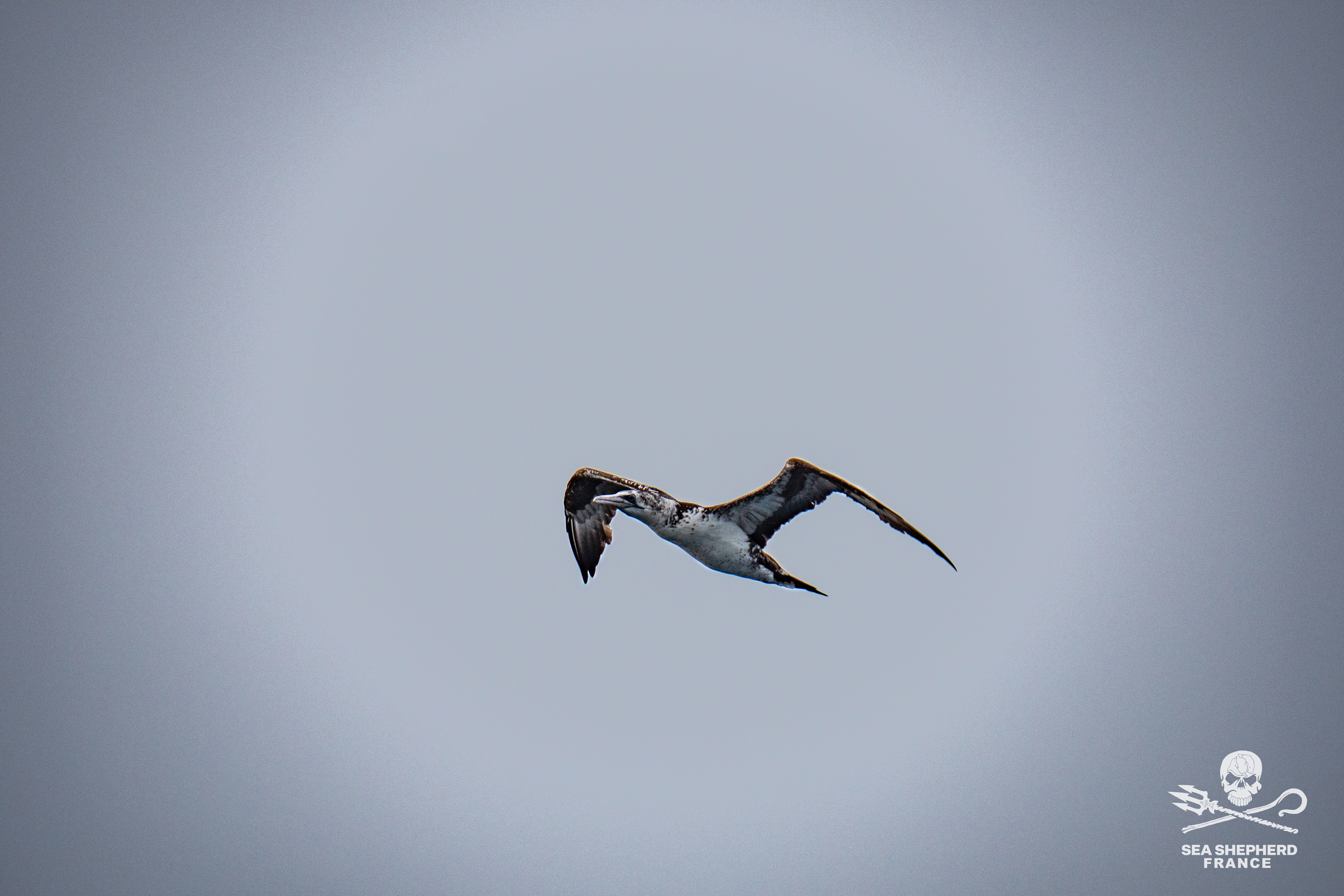
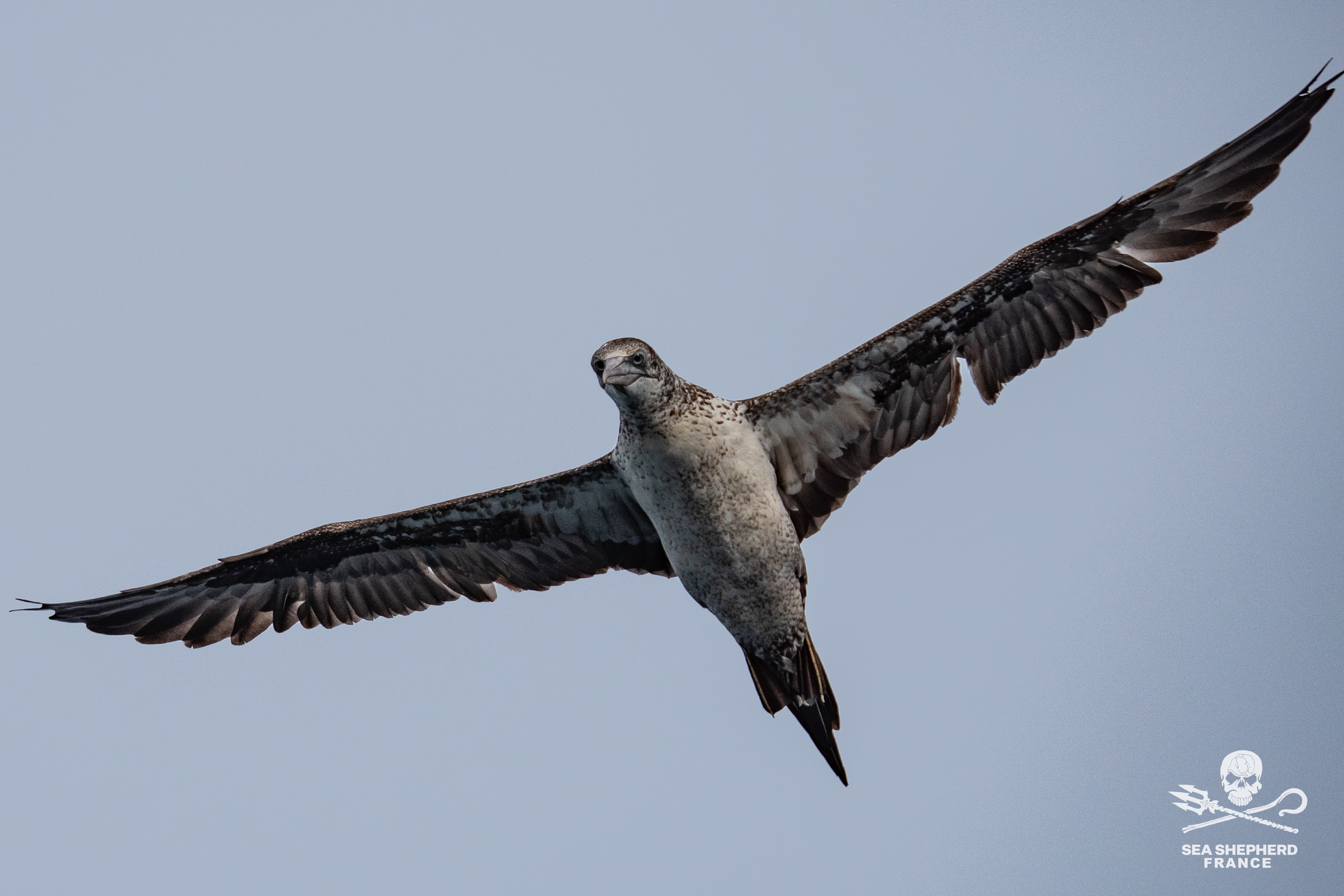
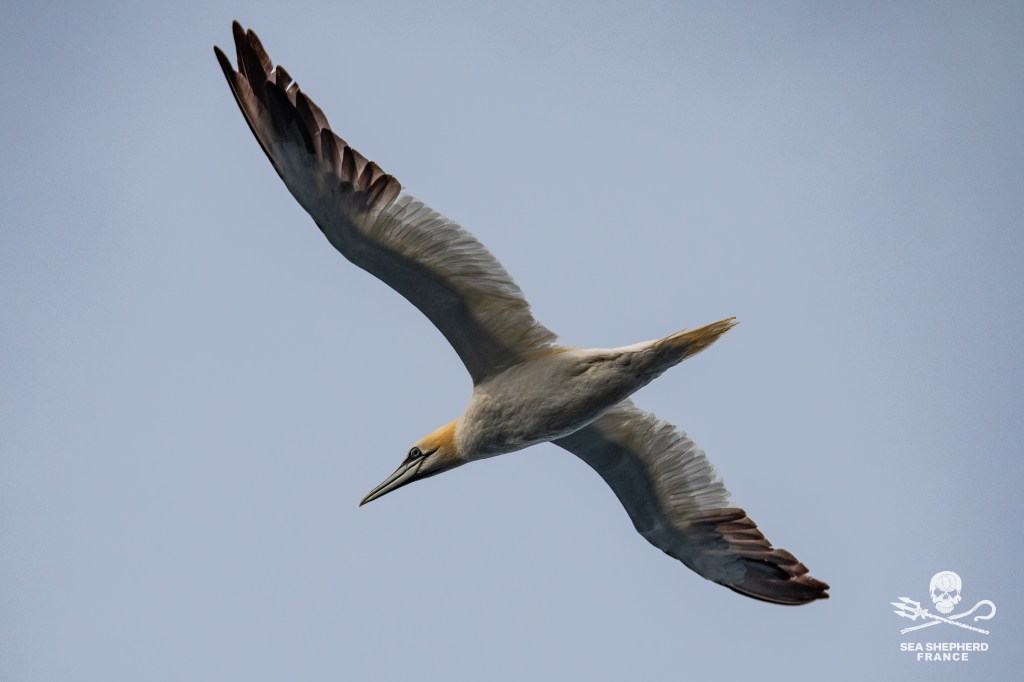
Above : 1-2) Juvenile Northern gannet. 3) As an adult, the Northern gannet cans reach up to 180 cm in wingspan and its plumage is bright white except for the pale yellow neck and the dark brown to black wing tips. Its eyes are circled with electric blue.
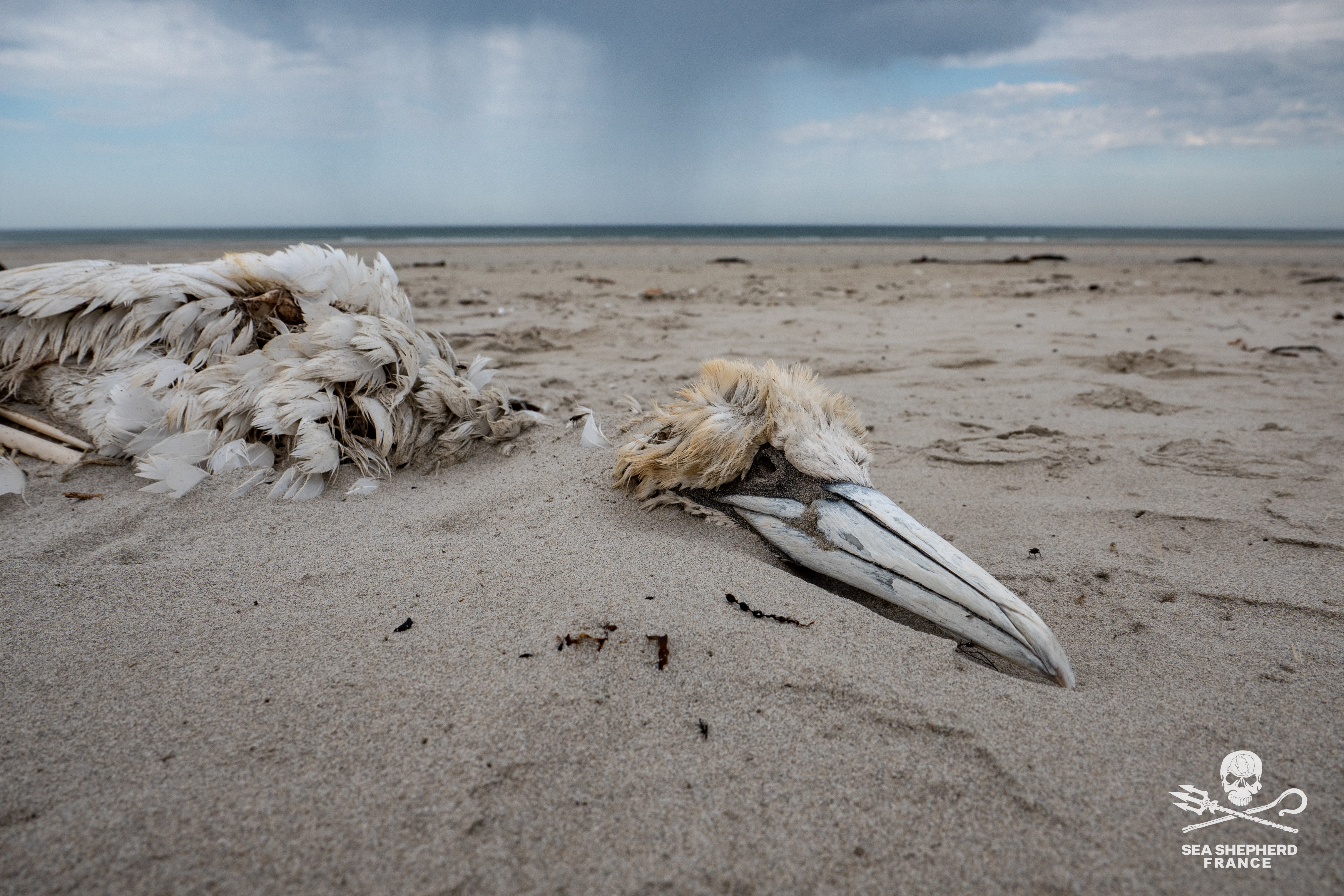
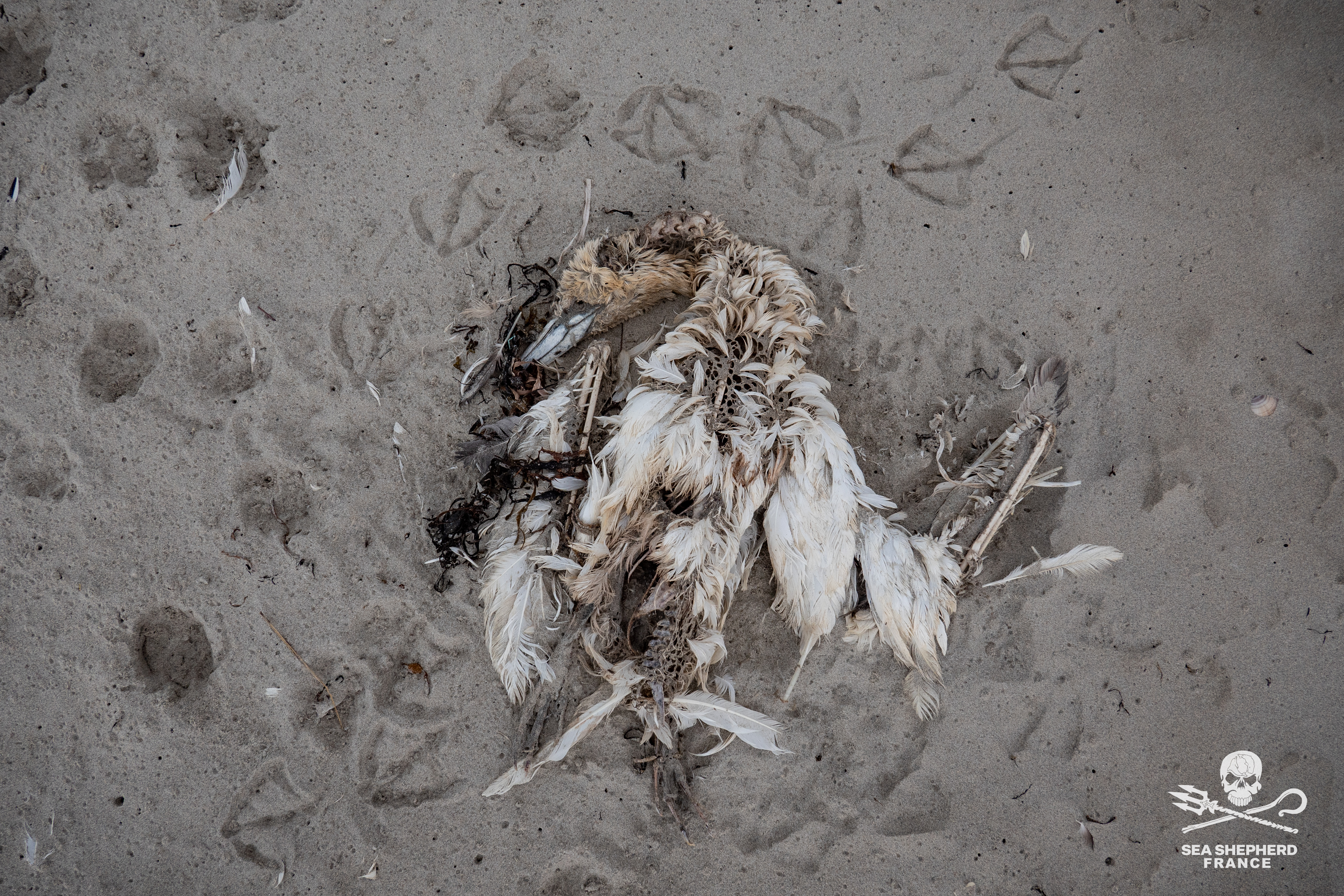
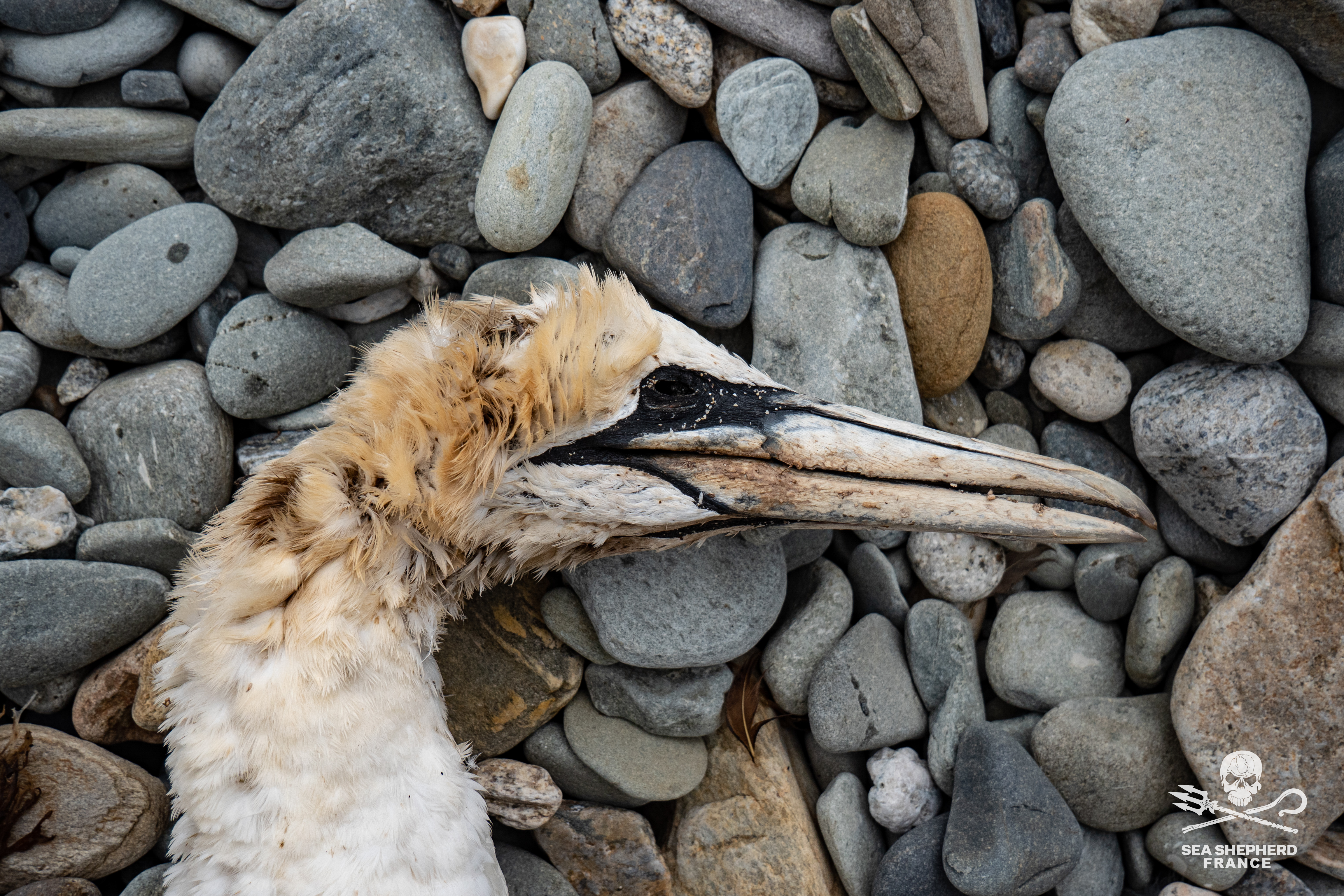
Below : During the month of August 2022, several hundreds seabirds were washed ashore the French Atlantic coast.

 Hugo Bret
You must be logged in to post a comment.