A research team of the BOREA Laboratory (Biology of Aquatic Organisms and Ecosystems) and the University of the West Indies investigates the morphological evolution of some reef fishes in the Guadeloupe archipelago. Although the life stages of reef fishes are well-known in the Caribbean, the changes in morphology induced at each new stage, from larva to adult, still poorly documented.
What grows the fastest ? The fins ? The length of the body ? The mouth ?
Are the morphological changes in one species from one stage to another also observable in other species ?
Do fishes live differently (diet, swimming, etc.) depending on their life stage ?
The research team directed by Prof. Dr. Charlotte Dromard tries to find answers to these questions and many more.
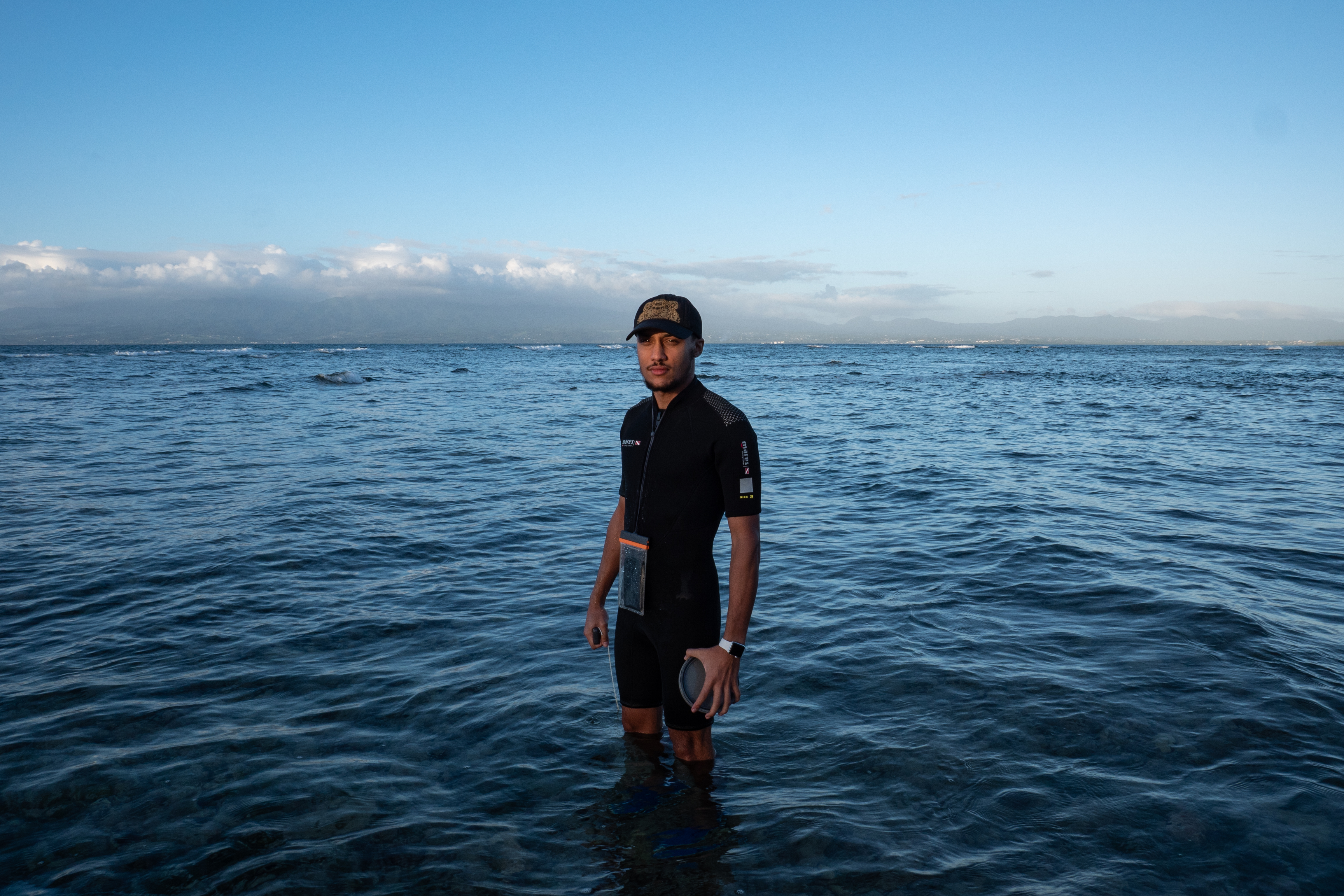
Portrait of Mehdi Boudault, M.Sc. student working on post-larvae ontogenesis.
The post-larvae sampling campaign began on January 4th, 2022. For several months, the entire research team, assisted by some volunteers from the University of the West Indies, sampled during the nights of the new Moon according to the observed peak of reef colonization by the juveniles of the studied species.
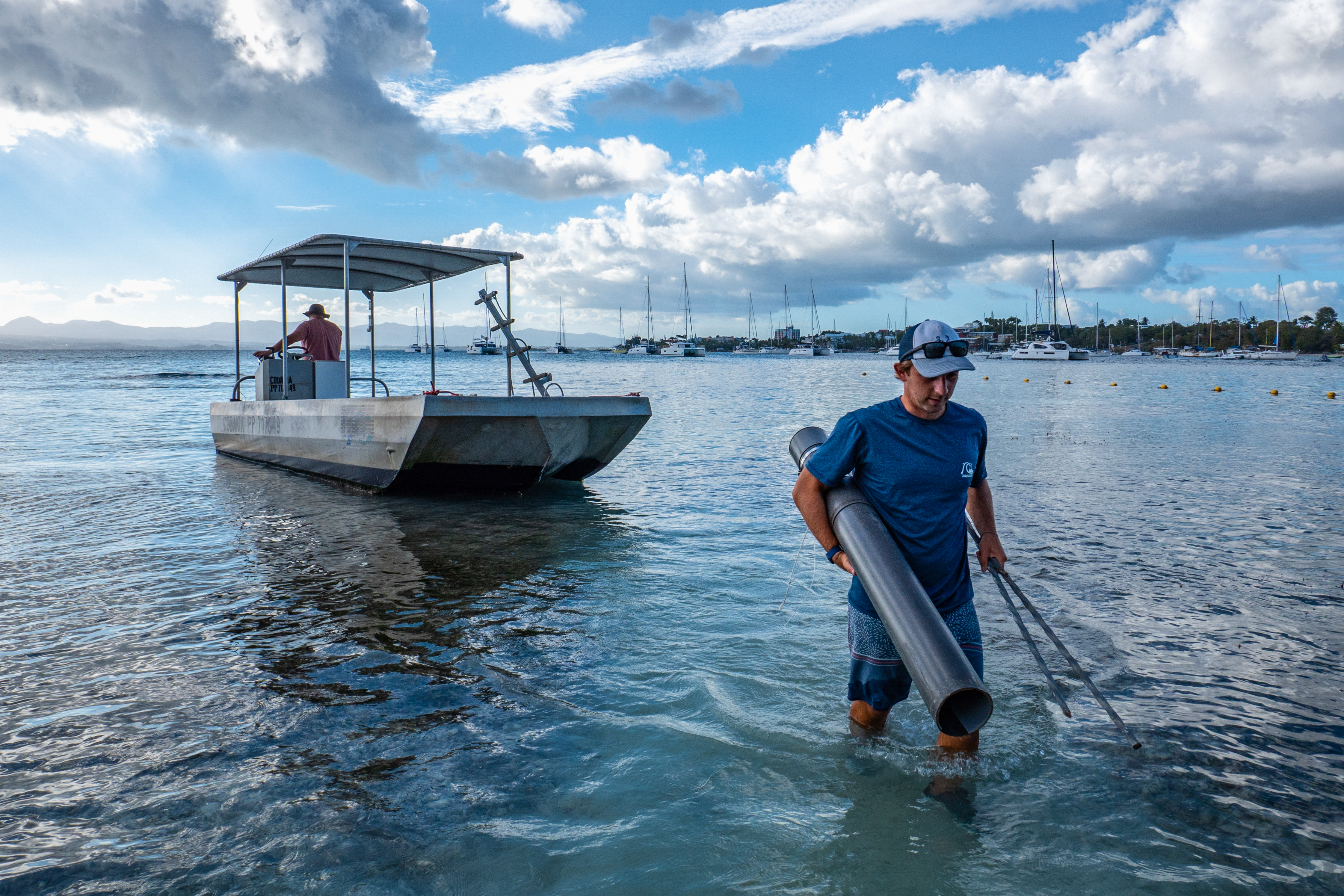
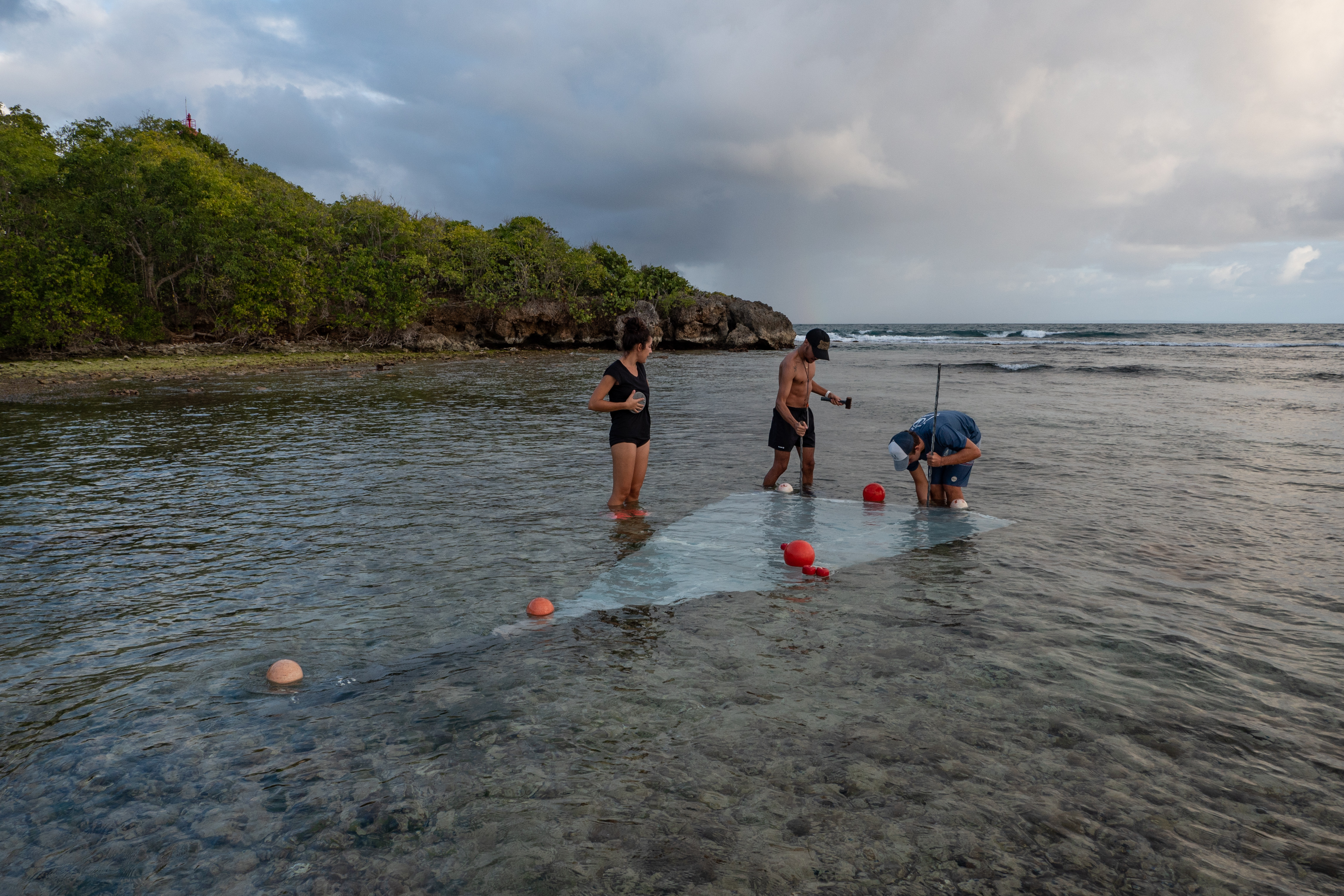
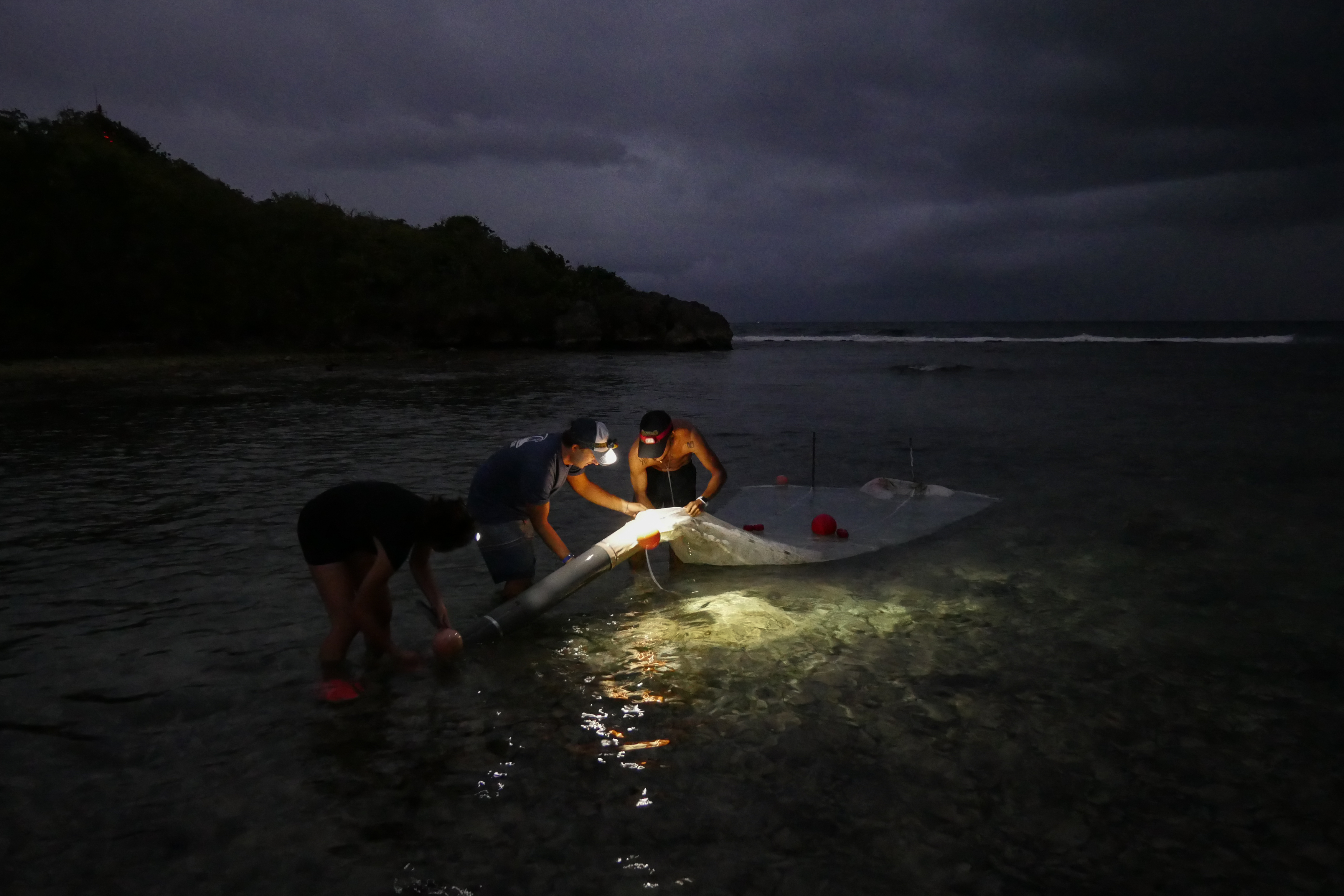
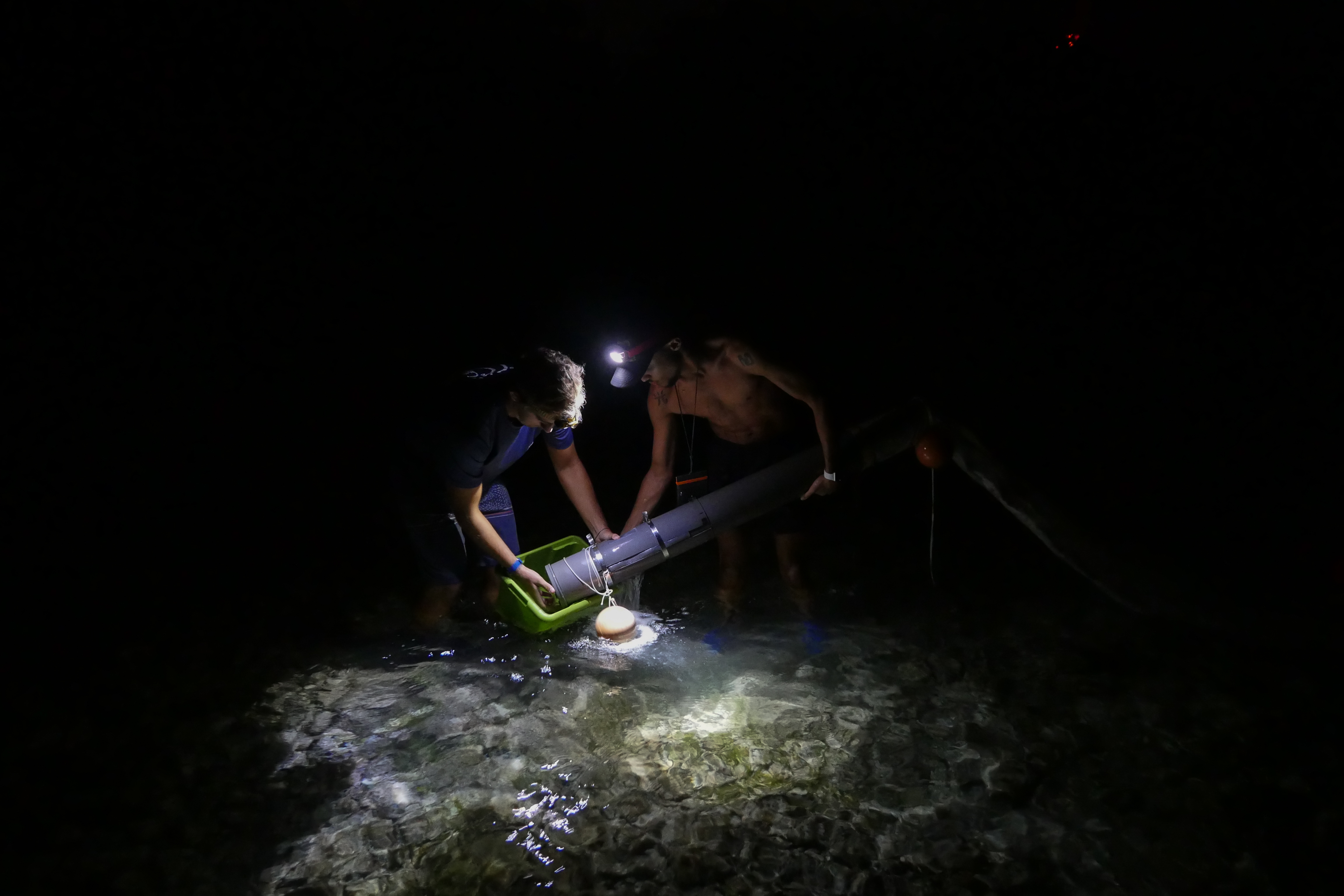
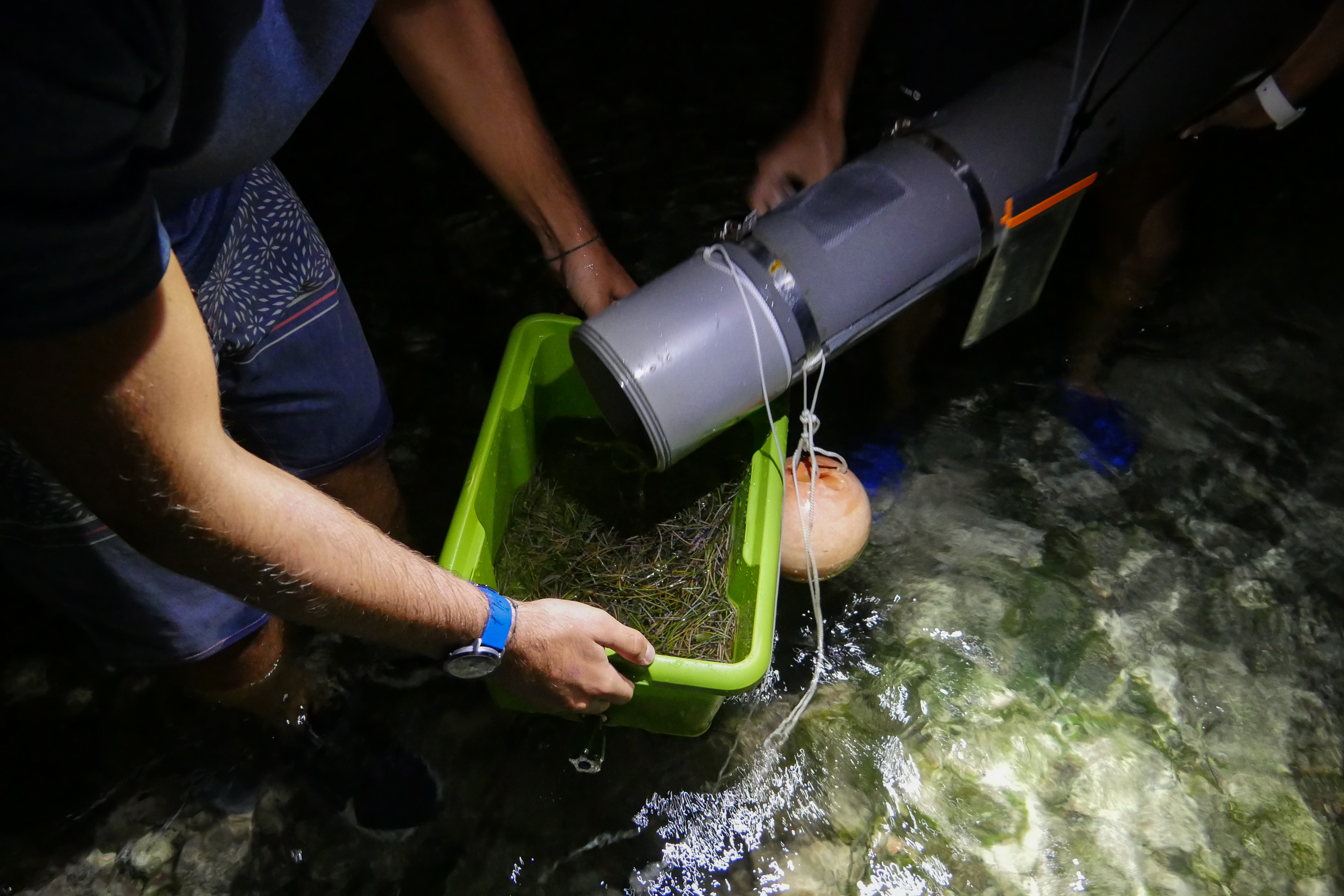
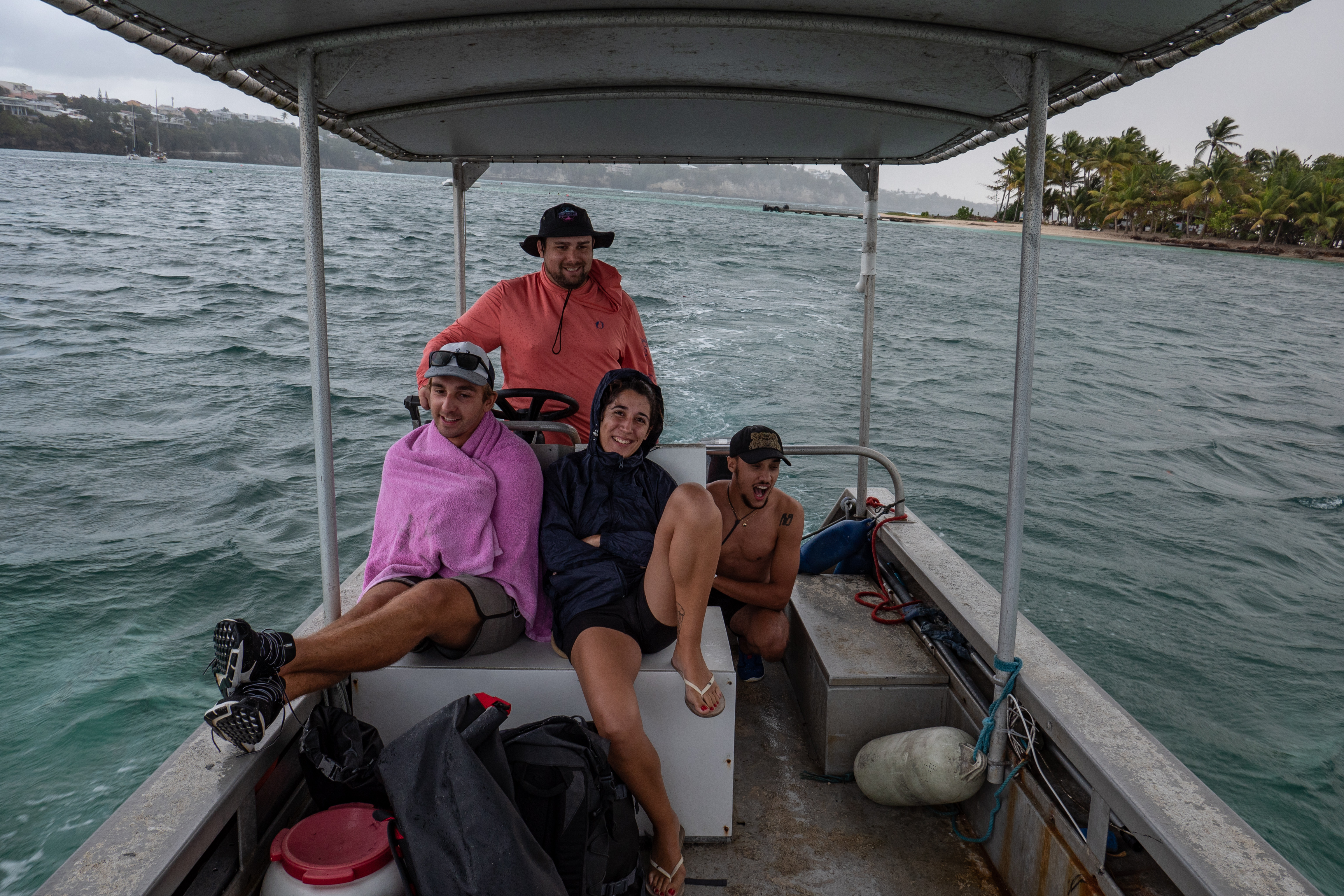
Thus, around 4:30 p.m., researchers and students boarded on the Codakia, the lab’s boat. They joined the Gosier island by making their way through the seagrass beds to reach shallow waters and unload the equipment. The ridge net was assembled and fixed on the reef. The operation of this fishing gear relies on the hydrodynamics on the reef crest which, through water surface movements, pushes the post-larvae inside the net to the collector. The presence of numerous plant debris obstructing the entrance of the collector forced the field team to stay on site all night to empty it regularly.
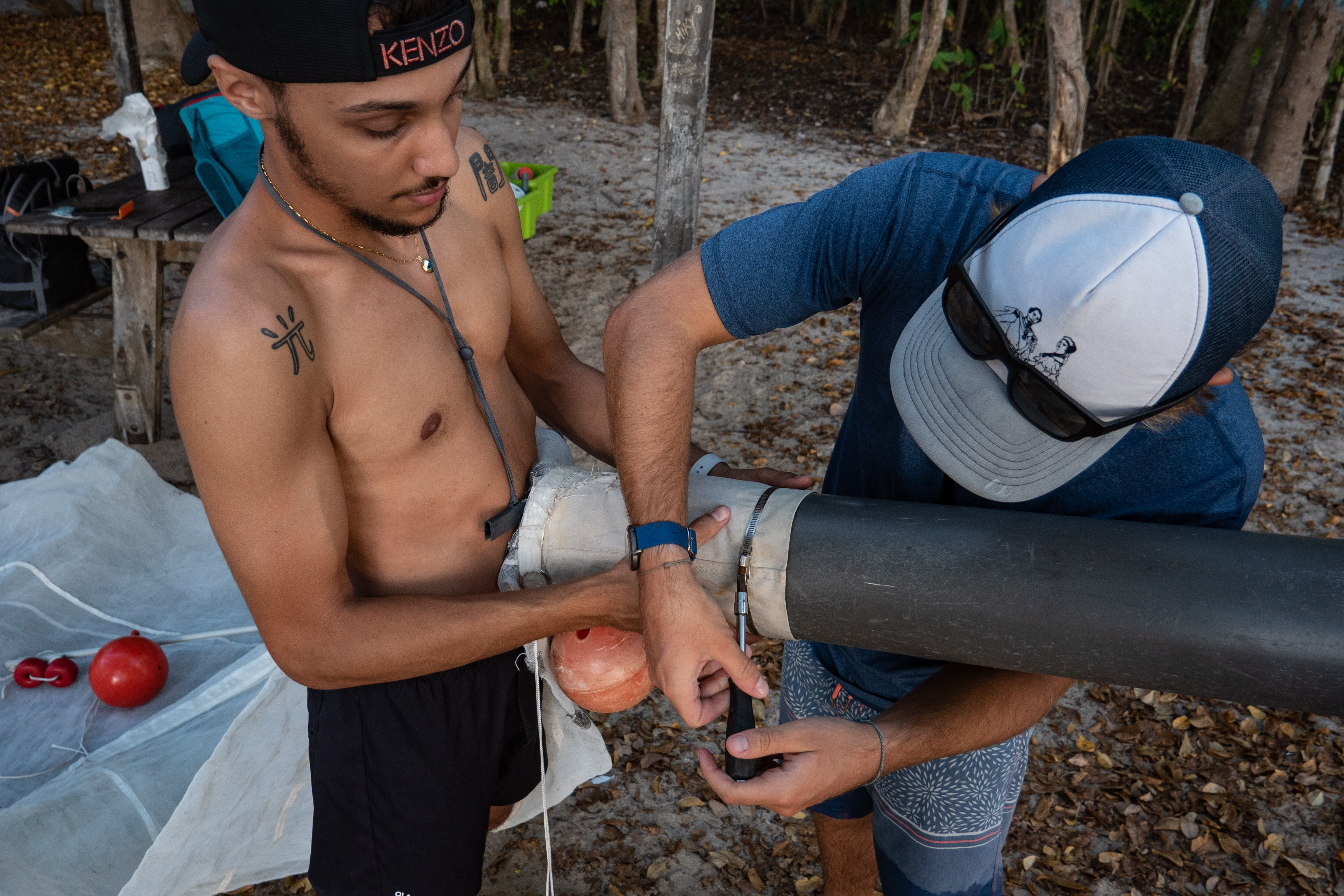
M.Sc. students Mehdi Boudault and Lucas Bernal assemble the different parts of the ridge net and anchoring it into the reef.
When they finally reached the camp to put down their hammocks, the sun was low on the horizon and the surrounding mountains spread their shadows over the lagoon. They opened a few beers while enjoying the view : in the tropics, the sky takes on colors like nowhere else at sunset, a pastel blend both soft and warm.
POST-LARVAE COLLECTION AND SORTING
The tide goes down progressively. The seagrass beds are now outcropping at the surface of the water. After two hours of sleep, half of the research team gets out of the hammocks and puts on their water shoes to recover the collector placed at the end of the ridge net.
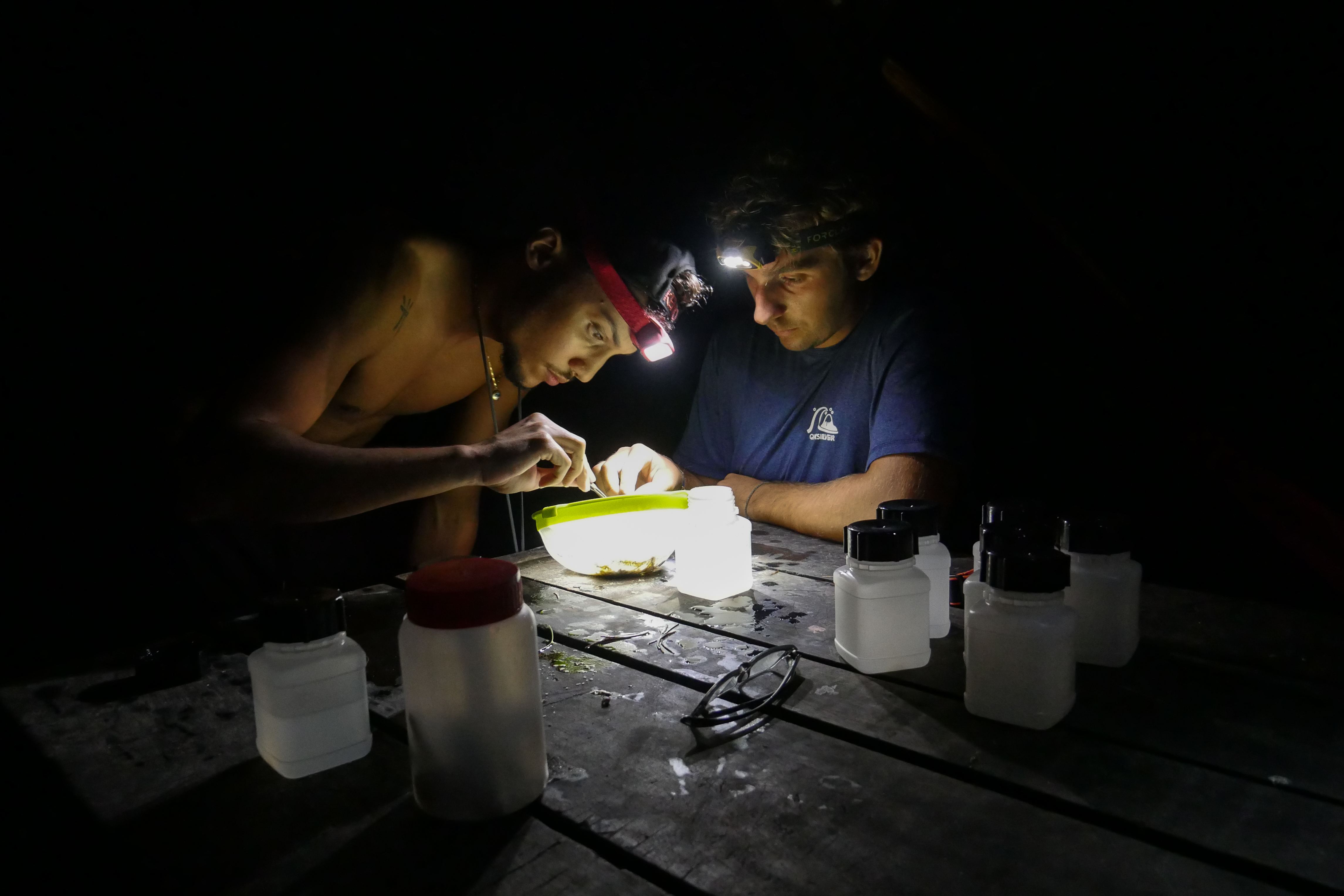
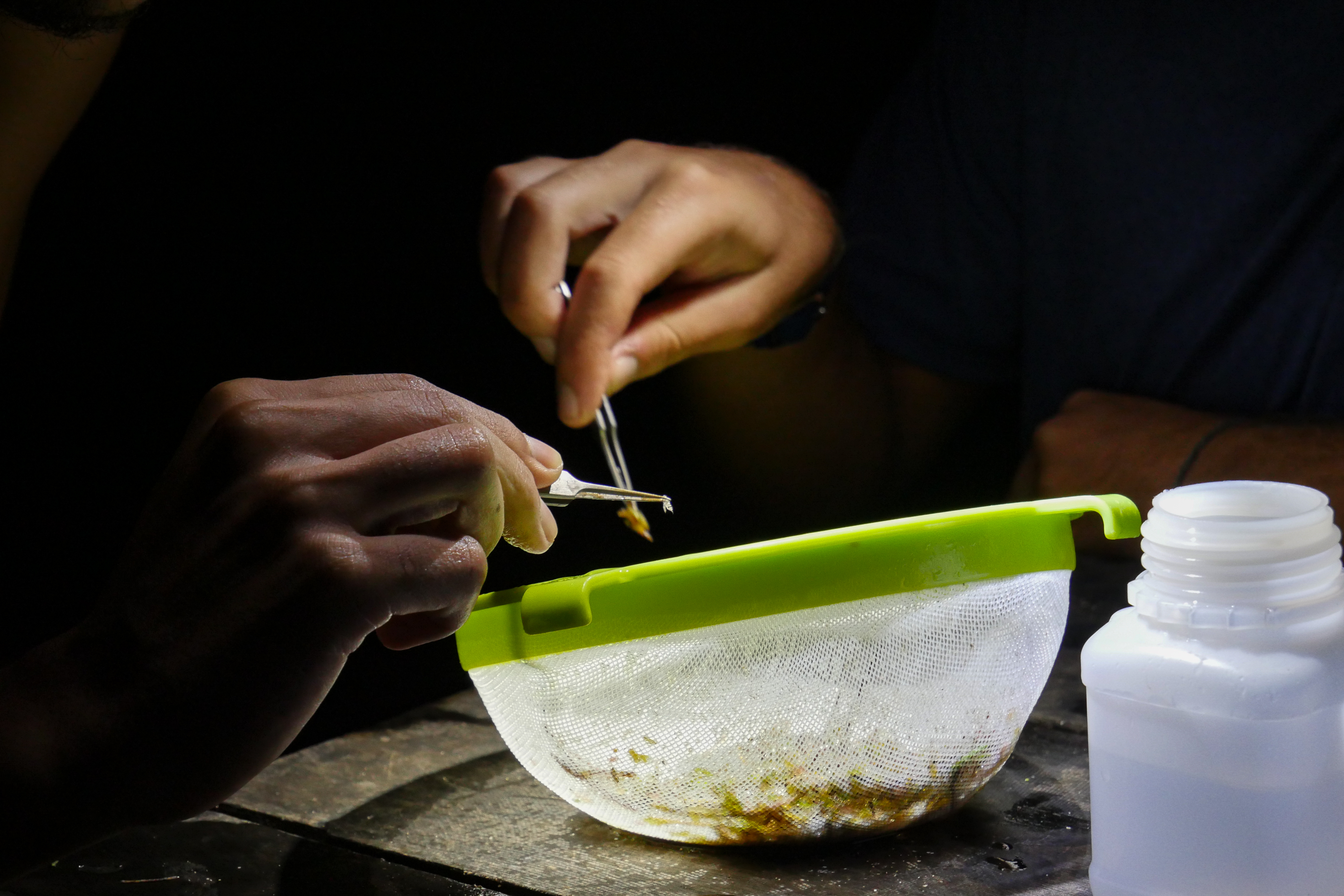
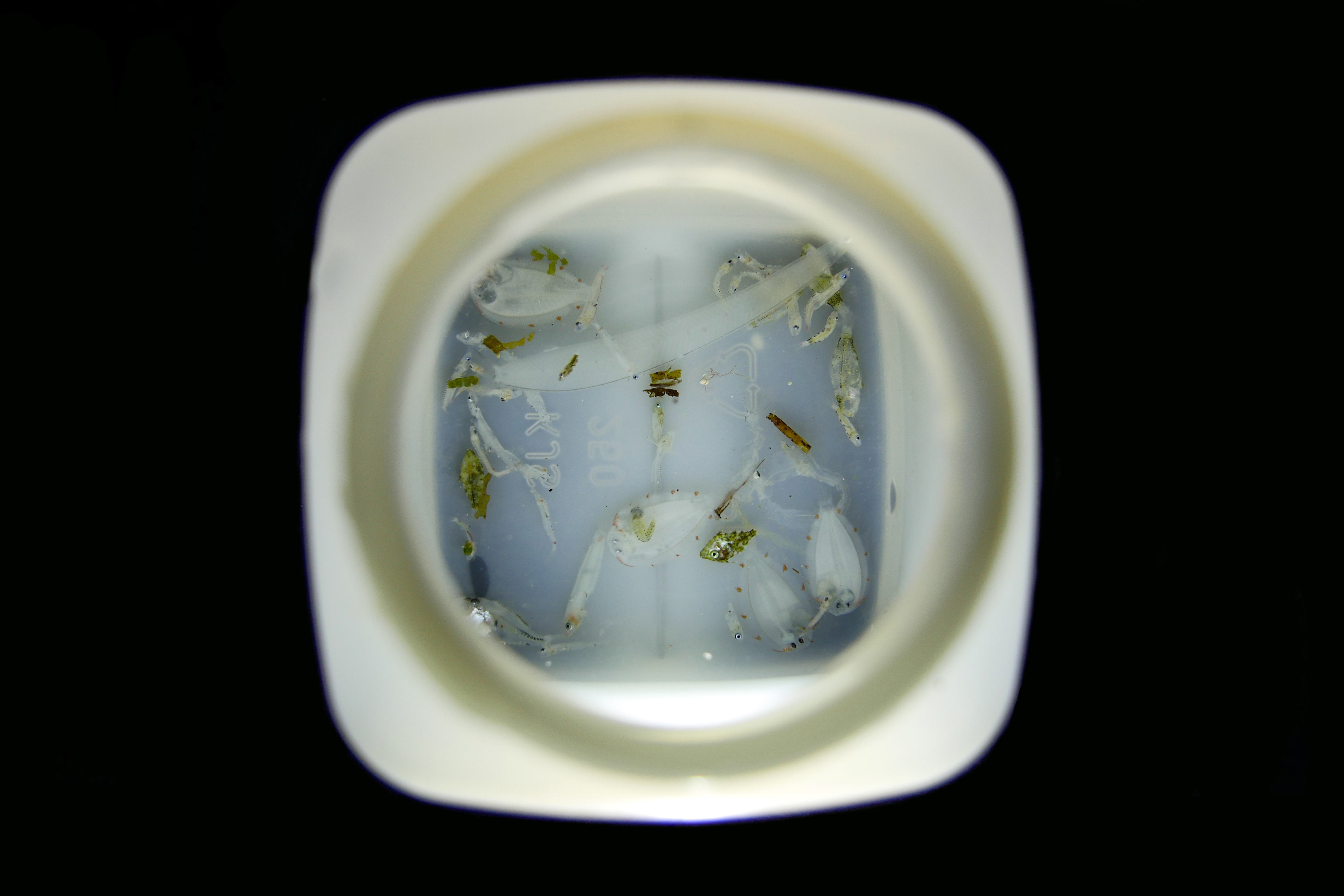
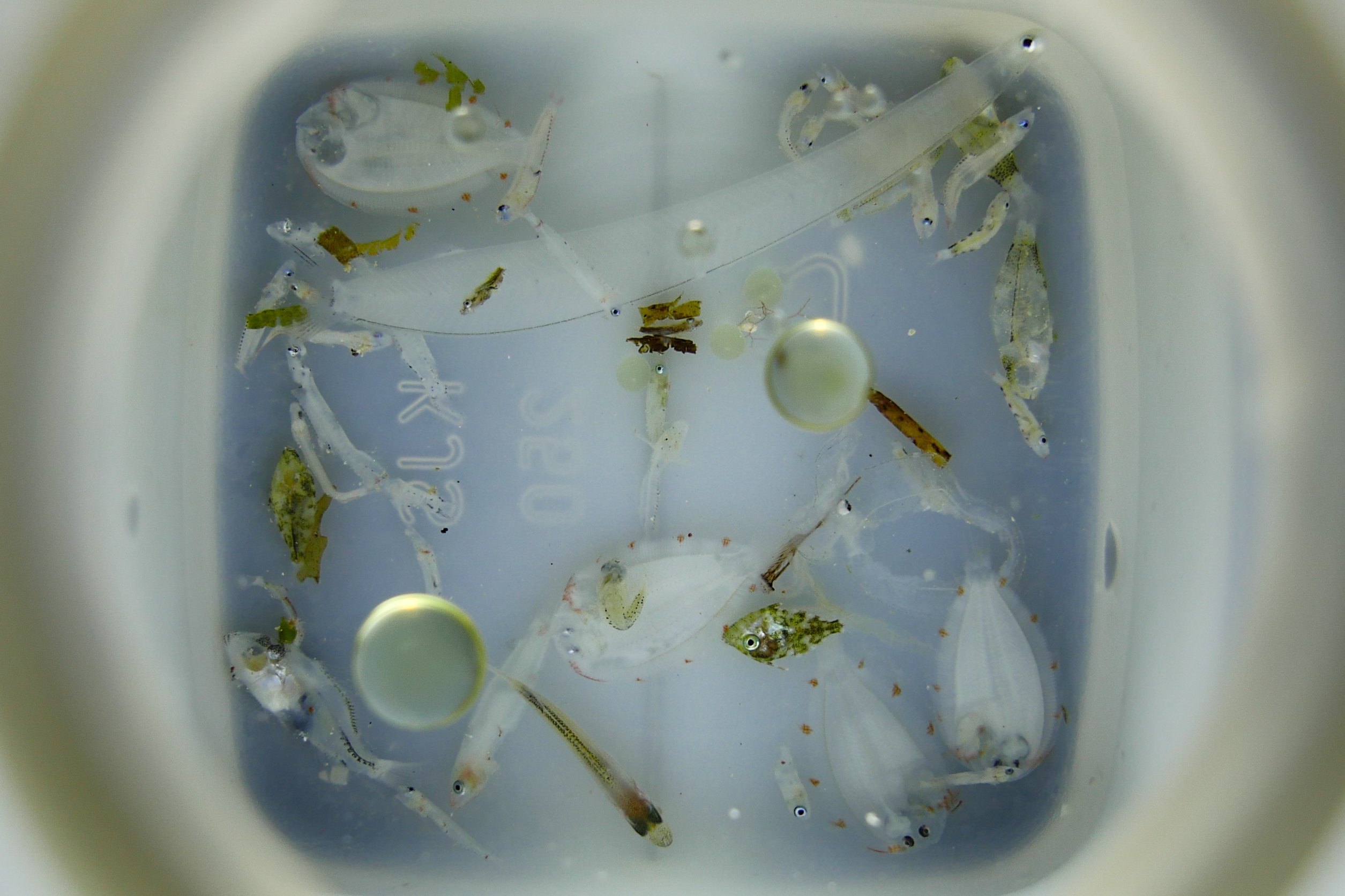
Back to the camp to sort out the post-larvae and the juvenile fish. The team separates them from vegetal debris using tweezers. It is not easy to find individuals of the studied species (Ocyurus crysurus, Acanthurus chirurgus and Stegastes leucosticus) that can be used for morphometry : they have to be intact, including the fins, and yet predators such as squilla are quick to feast on them. The collected post-larvae were then sedated using clove’s essential oil and conserved in seawater.
BACK TO THE LABORATORY
After a long night sampling post-larvae, they removed the ridge net and went back to the lab. The next step is to build a database by taking photographs of the collected individuals and then determine the changes in morphology between the life stages of each species using morphometry. A long way to go !
« The analysis by landmarks also known as geometric morphometry has highlighted significant differences in shape between ontogenetic stages for each of the three species. »



 Hugo Bret
You must be logged in to post a comment.